
The Puppy Nail Trimming Game
Teach Your Puppy That Nail Clippers Bring Treats, Not Trouble
Puppies are learning approximately 900 things at once, so it’s easy to forget about their nails until they really need to be trimmed. Then you sit down, pick up a paw, and your puppy reacts like you’re trying to remove the entire leg. They pull away. You try again. They pull harder. Five minutes later, you’re both frustrated and not a single nail has been trimmed. So what went wrong? You asked them to accept the entire nail-trimming process before they understand what was even happening.
This is where the Puppy Nail Trimming Game comes in.
Instead of trying to complete a full nail trim, you’ll teach your puppy one small part at a time. Clippers appear, treats happen. You touch a paw, treats happen. You tap a toenail, treats happen. Eventually, clipping the nail becomes just one more step in a game your puppy already knows.
What You’ll Need
Before starting, gather:
- Dog nail clippers that feel comfortable in your hand
- A container of small, high-value treats
- A nonslip surface, such as a rug or mat
- A calm puppy who isn’t currently bouncing off the walls
Scissor-style and guillotine-style clippers can both work, although some puppies tolerate scissor-style clippers better. You can also use a nail grinder, and can introduce its sound and vibration during the game.
Your treats should be small because you’ll use a lot of them. This is not the time to hand out full-size dog biscuits that take three minutes to chew.
Choose the Right Time and Place
Do not introduce nail clippers while your puppy is having the zoomies, chasing the cat, attacking your pants, or otherwise making questionable life decisions.
Pick a time when your puppy is calm but awake. After a walk, play session, or potty break often works well.
Sit together on a rug or another nonslip surface. Your puppy can lie down, stand, sit beside you, or relax in your lap. Use whichever position feels comfortable without making your puppy feel trapped.
Keep the first sessions short. One or two successful minutes will accomplish more than ten minutes of wrestling.
How the Puppy Nail Trimming Game Works
Your puppy does not need to master every step in one day.
Start at the beginning and watch their reaction. If they remain relaxed, accept treats, and allow you to continue, move to the next step. If they pull away, stiffen, stop accepting treats, or try to leave, go back to an easier step.
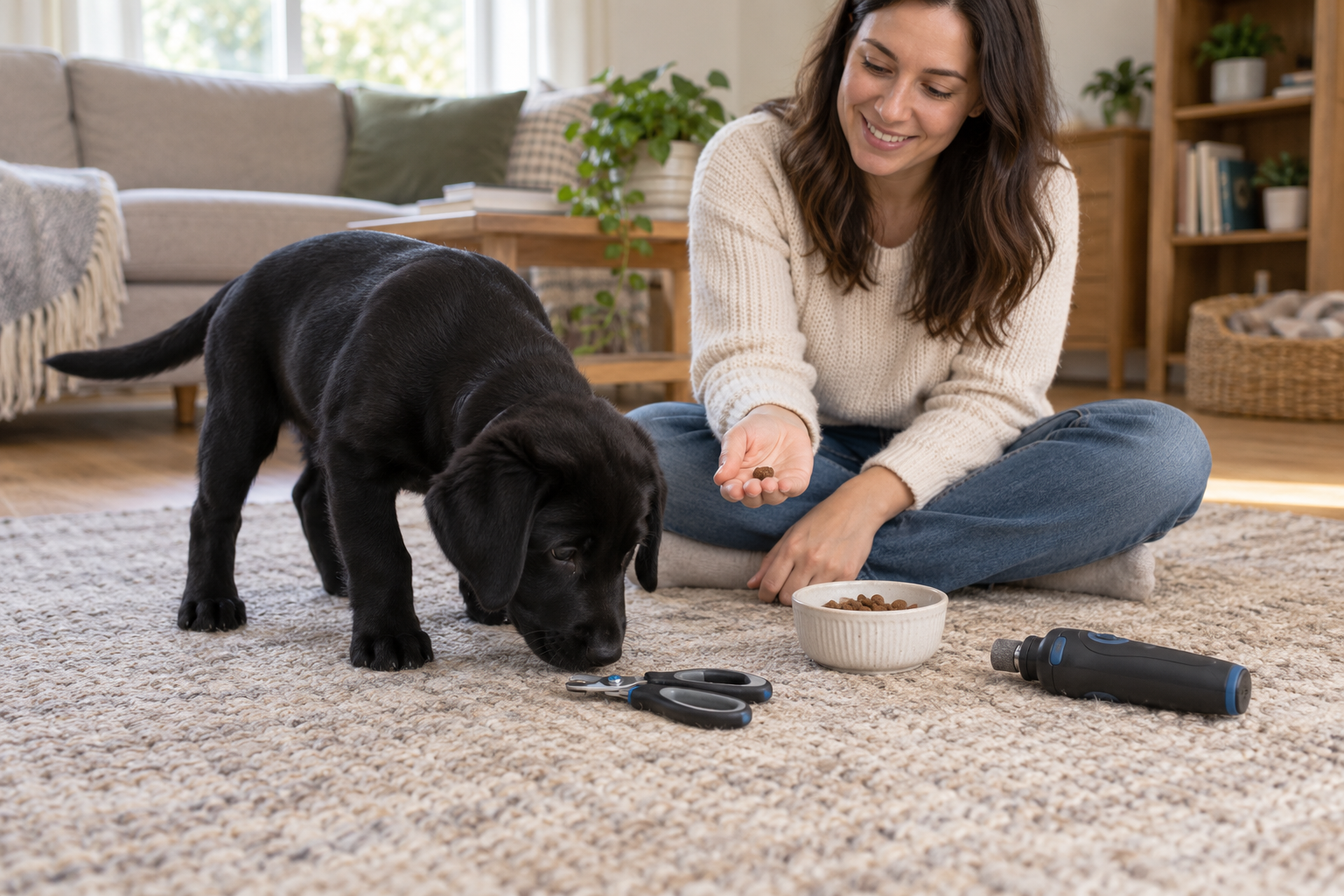
Level 1: The Clippers or Nail Grinder Appears
Take out the nail clippers or nail grinder and put them where your puppy can see them. Turn the grinder on, but don't acknowledge it. Just let it sit there.
Let your puppy look and sniff at them.
TREAT.
Move the clippers or grinder slightly.
TREAT.
Pick them up and put them back down.
TREAT.
Then put the clippers or grinder away and end the game.
Nothing gets clipped during this level. Your puppy is only learning that sitting with you and the appearance of the clippers or the whirring nail grinder predicts something good.
Repeat this level until your puppy shows no concern when they come out.
Level 2: Touching Legs and Paws
Leave the clippers or nail grinder (running) nearby, but don’t pick them up yet.
Touch your puppy’s shoulder or upper leg.
TREAT.
Slide your hand down the leg toward the paw.
TREAT.
Briefly touch the paw.
TREAT.
Touch one toe.
TREAT.
Practice with all four paws over several short sessions.
If your puppy is comfortable having their paws touched, you may be able to move through this level quickly. If they immediately pull their foot away, slow down. Start higher on the leg and work your way toward the paw.
The goal is not to hold on tighter than your puppy can pull. The goal is to make pulling away unnecessary.
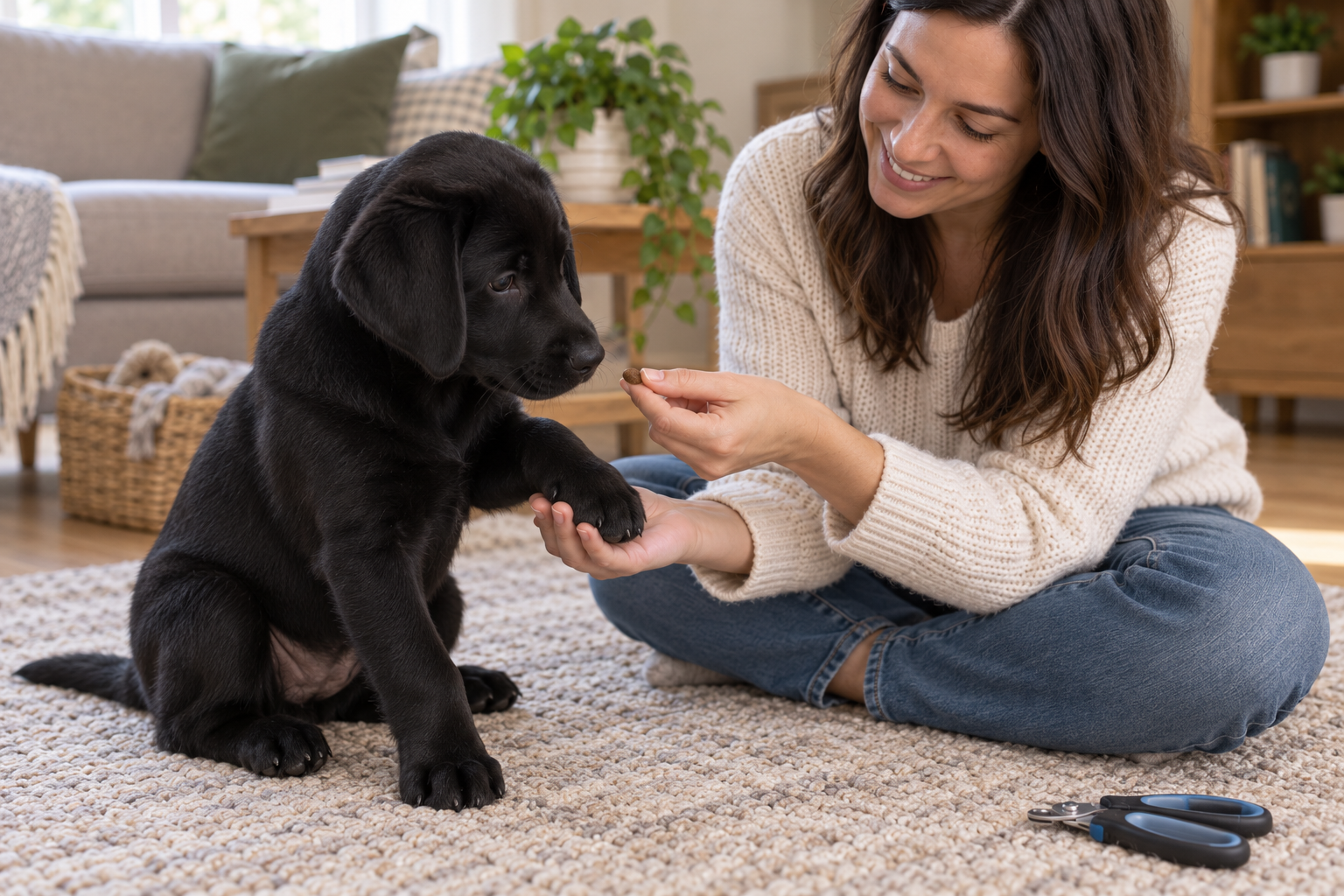
Level 3: Picking Paws Up
Pick up one paw for one second.
TREAT.
Pick it up again for two seconds.
TREAT.
Hold the paw and lightly touch one toenail.
TREAT.
Gradually practice holding the paw long enough to look at each nail.
Do not squeeze the paw or separate the toes roughly. Support the foot in a natural position and release it before your puppy becomes uncomfortable.
Once your puppy allows you to briefly hold and examine each paw, move to the next level.
Level 4: Bring the Clippers or Nail Grinder to the Paw
For this step if you are using a nail grinder, leave the grinder off.
Hold your puppy’s paw in one hand and the clippers or nail grinder in the other.
TREAT.
Move the clippers or grinder toward the paw without touching it.
TREAT.
Touch the side of the clippers or grinder lightly against one toenail.
TREAT.
Tap a second toenail.
TREAT.
Repeat with the other paws, then end the game with a treat jackpot.
You still aren’t cutting anything. Your puppy is learning that touching a toenail with the clippers or the nail grinder is no big deal.
Level 5: Introduce the Clipping or Nail Grinding Sound
The sound of the clippers or nail grinder can surprise a puppy even if they’re comfortable having their paws handled.
Clippers: Open and close the clippers near your puppy without touching a nail.
Nail Grinder: Turn on the grinder near your puppy without touching a nail.
TREAT.
You can also clip or grind a piece of dry spaghetti away from your puppy’s paw so they can hear the sound.
TREAT.
Gradually make the sound closer to the paw, but don’t rush this step if your puppy becomes suspicious.
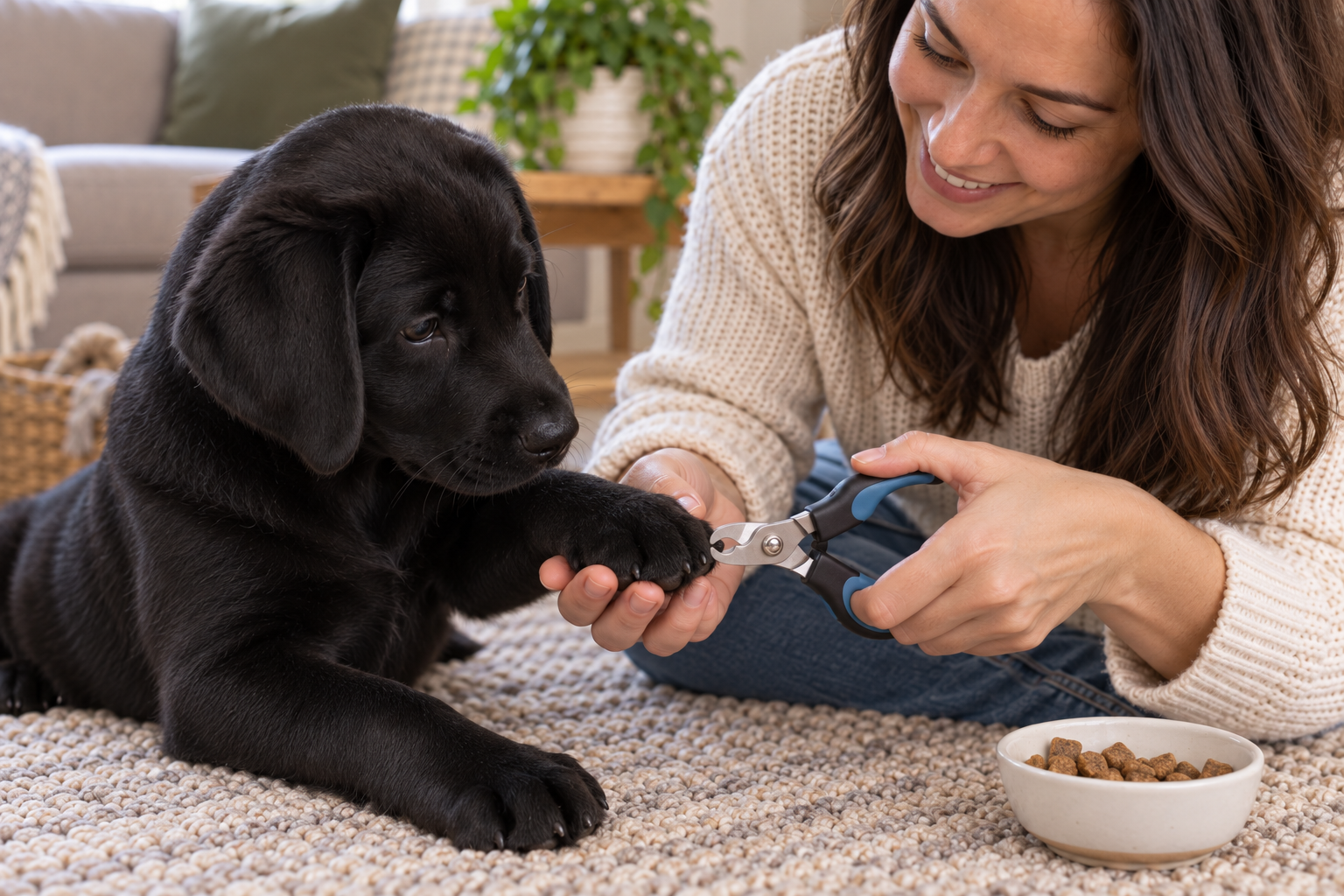
Level 6: Clip One Nail
Once your puppy is comfortable with the previous levels, it’s time to clip the very tip of one nail.
Hold the paw, position the clippers or grinder, and remove only a tiny amount.
TREAT JACKPOT.
Then stop.
Yes, even if your puppy has seventeen other nails waiting.
Ending after one successful nail teaches your puppy that nail trimming is quick, predictable, and profitable. That is far more valuable than pushing through an entire paw and creating a fight.
During the next session, do another nail. As your puppy becomes comfortable, move up to two nails, then three, then one full paw.
There is no rule saying all the nails have to be trimmed during the same session.
How Fast Should You Move Through the Game?
Your puppy decides the pace.
A puppy who has never had a bad experience may move through several levels in one or two sessions. A puppy who already runs when the clippers appear may need days or weeks.
Watch for signs that you’re moving too quickly:
- Pulling the paw away repeatedly
- Refusing treats they normally love
- Turning or leaning away
- Tucking the tail
- Pinning the ears back
- Panting when they aren’t hot
- Becoming unusually still or stiff
- Growling, snapping, or attempting to escape
These behaviors don’t mean your puppy is stubborn or dramatic. They mean the current step is too difficult.
Stop, reset, and make the next session easier.
How to Clip a Puppy’s Nails Safely
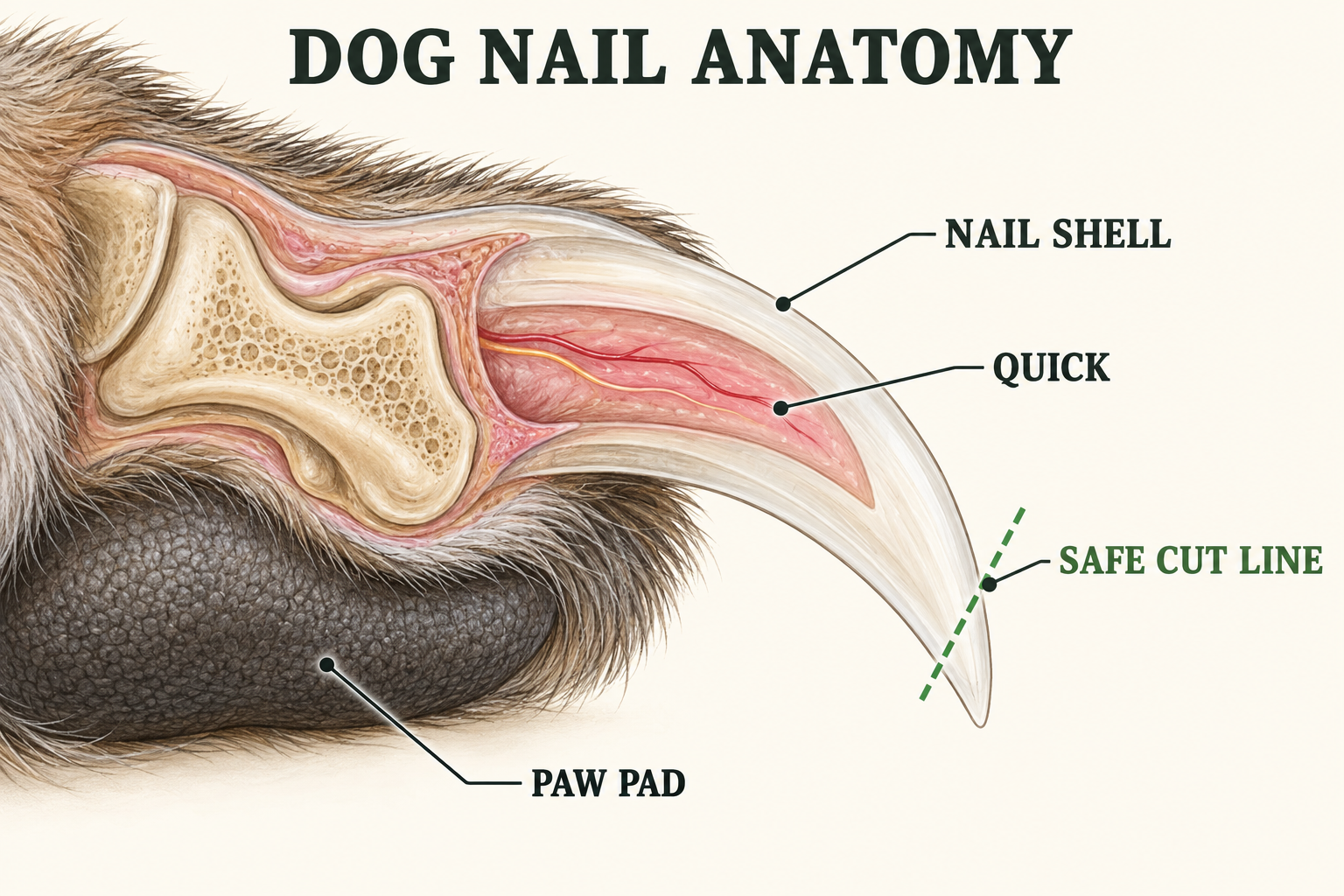
Inside each nail is a sensitive area called the quick. It contains nerves and blood vessels, so cutting into it can cause pain and bleeding.
Light or Clear Nails
On a light-colored nail, the quick is usually visible as a pink area inside the nail. Remove the pointed or curved tip while leaving a small amount of nail between your cut and the quick. Never aim to cut as close to the quick as possible. Leave yourself room for error.
Dark Nails
The quick is harder to see through a dark nail, so remove tiny amounts instead of making one large cut. After each small cut, look at the center of the nail. The inside will initially appear dry or chalky. As you get closer to the quick, the center may become darker or look slightly shiny. Stop before cutting farther. If you’re nervous about identifying the quick, ask your veterinarian, veterinary technician, or groomer to show you where they would stop on your puppy’s nails.
Don’t Forget the Dewclaws
Dewclaws are located higher on the inside of the leg and may be easy to miss. Because they don’t normally touch the ground, they don’t wear down naturally. Check them during every nail inspection. An overgrown dewclaw can curve toward the paw pad or snag and tear.
What If Your Puppy Won’t Stay Still?
First, lower your expectations for the session. If your original goal was to clip four nails, change the goal to touching one nail with the clippers or grinder. If that’s still too difficult, go back to briefly holding the paw.
Try:
- Using better treats
- Moving to a nonslip surface
- Practicing after exercise or play
- Making the session shorter
- Working on one paw at a time
- Having another person calmly deliver treats
- Changing your puppy’s position
- Practicing when you do not actually need to trim anything
Treats should help your puppy understand and enjoy the process. They should not be used to trick a frightened puppy while you secretly grab a paw and clip a nail. Your puppy should know what’s happening.
Should You Hold a Struggling Puppy Down?
No nail needs to be trimmed badly enough to turn the process into a full-body wrestling match. Forcing a panicked puppy to remain still may get the nails clipped today, but it can make every future nail trim harder. It also increases the chance that your puppy will move suddenly while the clippers or grinder are positioned around a nail.
If your puppy begins struggling, release the paw and make the next attempt easier.
Growling is also information. Do not punish your puppy for warning you that they’re uncomfortable. Stop the session and figure out which part of the process needs more work.
What If the Nails Are Already Too Long?
If the nails are clicking loudly on the floor, changing how your puppy stands or walks, curling toward the paw pads, or snagging on things, they may need attention before your training is complete.
Do not attempt a major trim on an anxious, struggling puppy by yourself.
Contact your veterinarian or an experienced groomer. If your puppy is extremely frightened or likely to bite, start with your veterinarian. They can help you create a safer plan and determine whether medication is appropriate for the immediate trim.
You can continue playing the Nail Trimming Game at home so future trims become easier.
What If You Accidentally Cut the Quick?
First, don’t panic.
Your puppy may yelp, and the nail may bleed more than you expect. Stay calm so your reaction doesn’t make the experience even scarier.
Apply styptic powder directly to the end of the nail and use steady pressure. If you don’t have styptic powder, flour or cornstarch may help in a pinch.
Once the bleeding stops, end the nail trim for the day.
Contact your veterinarian if the bleeding doesn’t stop, the nail is split or torn, or your puppy continues limping or showing significant pain.
Hitting the quick does not mean you’ve ruined nail trimming forever. Go back to easier parts of the game during the next few sessions and rebuild your puppy’s confidence before trying another nail.
How Often Do Puppy Nails Need to Be Trimmed?
Many dogs need nail care about once a month, but there is no schedule that works for every puppy. Check the nails every week. If they touch the ground while your puppy is standing or click against hard floors while walking, it’s probably time for a trim.
Puppies who spend time walking on pavement may wear their nails down faster. Dewclaws still need to be checked because they don’t touch the ground. Frequent, tiny trims are usually easier than waiting until the nails are long and trying to remove a large amount.
The Goal Isn’t a Perfect Nail Trim
The first win might be one paw held for two seconds.
The next win might be tapping one toenail with the clippers.
Then one day, you’ll clip a nail, hand over a treat, and your puppy will look at you like, “That’s it?”
That’s the goal.
Not overpowering your puppy. Not sneaking in a full trim while they’re distracted. Not winning a wrestling match.
You’re teaching your puppy that having their paws handled is safe, the process is predictable, and nail clippers make very good snacks appear.
Play the game now, and nail trimming can become one less thing for both of you to fight about.
Raising My Puppy provides general puppy training and care guidance, not veterinary or behavioral diagnosis or treatment. Contact your veterinarian or a qualified behavior professional for any concerns.
All guides · Planners · Pricing · Home